Prevent classic DLL Injection
Prevent classic DLL Injection
Today i made a dll to prevent the classic dll injection based on LoadLibrary functions of kernel32.dll, this is how to use it
You just need to put the dll in the same location of the exe or in some subfolder like .\\FolderName\\AntiDLLInject.dll
Result trying to inject with CE:
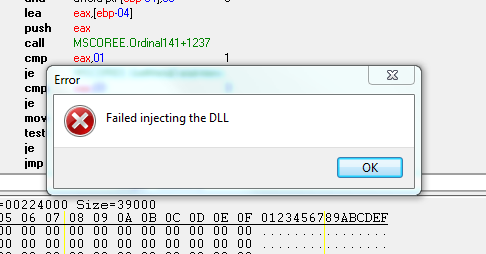
Antivirus scans:
https://www.virustotal.com/it/file/5...is/1411229492/
http://virusscan.jotti.org/en/scanre...e7154f23a02985
Download dll:
Code:
[DllImport("AntiDLLInject.dll", CallingConvention = CallingConvention.Cdecl)]
private static extern void Activate();

static void Main(string[] args)
{
    Activate();
    //etc...
}
Result trying to inject with CE:
Antivirus scans:
https://www.virustotal.com/it/file/5...is/1411229492/
http://virusscan.jotti.org/en/scanre...e7154f23a02985
Download dll:
Fixed rare crash bug caused by multiple hooks, updated the dll.
Please upload two scans of the .RAR file. One scan from VirusTotal and Jotti's malware scan for a total of two scans.
Wow I am lookin forward to this o_O
If i create a new (empty) dll with a same function name (that does nothing, ofc), i could avoid your protection..
This library should be integrated into the program then.
or i'm wrong?
This library should be integrated into the program then.
or i'm wrong?
 Originally Posted by TheTrigger

Code:
static class AntiDllInjection
{
    [DllImport("AntiDLLInject.dll", CallingConvention = CallingConvention.Cdecl)]
    private static extern void Activate();

    private static MD5 hasher = MD5.Create();
    private static readonly string md5checksum = "6E7E31653A365CC66D5CF977B2A9B473";

    public static void Protect()
    {
        if (string.Concat(hasher.ComputeHash(File.ReadAllBytes("AntiDLLInject.dll"))
            .Select(x => x.ToString("X2"))) == md5checksum)
            Activate();
        else
            throw new Exception();
    }
}
Code:
try
{
    AntiDllInjection.Protect();
}
catch (Exception)
{
    Console.WriteLine("Can't load protection...");
}
Nice Work :)
Originally Posted by Sam
What would happen if a legitimate DLL was loaded into the process, would your protection prevent it? Take DllImport as an example:
From the MSDN docs:
Originally Posted by msdn
Originally Posted by Jason
Originally Posted by Jason
Originally Posted by Sam
Originally Posted by Jason
 , the dll just handle native injection do not affects the .net app.
Source
any chance for the source?
Similar Threads
- 1Last post
- 1Last post
- 9Last post
- 1Last post
- 3Last post